Can You Prove ROI Weeks After the Show
AI event activations have become a fixture on the show floor: AI photo booths, generative art walls, avatar creators that transform a selfie into a stylized portrait. Most of them use a visual input and apply a style filter. VoxMerch is different in one specific way that matters to brands. The input is the attendee’s spoken answer to a brand-defined question. The artwork is constructed from their actual words and ideas. And the voice response doubles as first-party engagement data the brand can use after the event.
There is a moment on the show floor that every agency knows intimately. The badges are being scanned, the branded tote bags are moving, and the booth looks like a win. Then, three weeks later, someone asks: What did we actually learn about those people?
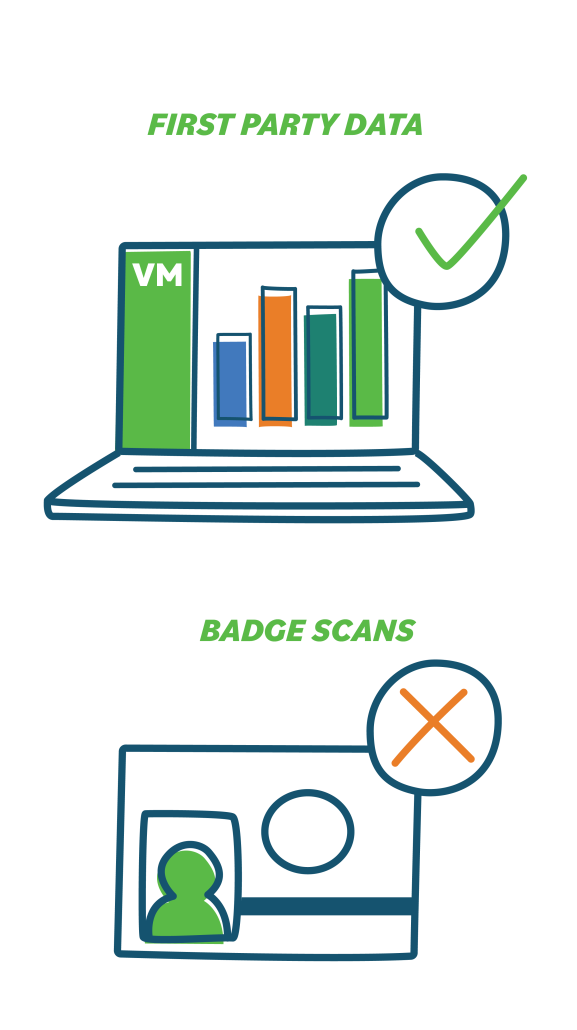
Most of the time, the honest answer is nothing. A badge scan records a name and a company. An AI photo booth produces a portrait. Neither one records an opinion, a priority, or what someone actually believes about the problem your client exists to solve.
That is not a problem with trade shows. It is a problem with the standard activation model, and it is the specific problem VoxMerch was built to fix.
What AI Event Activation Actually Is
The term gets used loosely, so it is worth being specific. An AI event activation, as VoxMerch deploys it, works like this: a brand defines a set of questions tied to a business objective. An attendee approaches the booth, speaks their answer to one question, and watches as the AI converts their voice into one-of-a-kind artwork within about 40 seconds. That artwork is texted, printed on-site and the attendee takes it home, or printed on branded merchandise and shipped post-event.
Three things happen simultaneously. First, the attendee gets something genuinely personal. Not a lanyard with a logo. A piece of art constructed from their own voice. Second, during that 40-second window while the artwork is generating, a natural conversation opens. The booth staffer is not forcing a pitch. The attendee is curious, engaged, and asking questions. Third, the brand captures a full record: what the person said, how they said it, which themes came up most often, and the attendee’s contact information, provided voluntarily at the moment of highest engagement.
That last part is the one that completely changes the post-event math.
Why Badge Scans Stopped Being Enough
The U.S. B2B trade show market reached $15.78 billion in 2024, surpassing pre-pandemic levels. Brands are spending serious money to be on the floor. But the data infrastructure most of them are working with has not kept pace with that investment.
Badge scanning captures presence. It does not capture intent, sentiment, or the content of any conversation. A stack of scanned badges is a list of people who may or may not have stopped at the booth, may or may not have spoken to anyone, and may or may not have the slightest interest in what the brand was selling. The follow-up sequence treats all of them the same because there is no signal to differentiate between them.
Research from Snapbar’s trade show engagement playbook documents what many exhibitors have already observed: leads captured through interactive activations convert at two to three times the rate of passive badge scans. The difference is not the lead capture mechanism. It is the depth of engagement that precedes it.
When an attendee voluntarily speaks their answer to a brand-defined question, they are self-selecting as interested. When they provide their contact details to receive a copy of their artwork, they are opting in at the moment of peak engagement. The data that comes out of that interaction is categorically different from anything a badge scanner produces.
The badge scan records who was there. The AI activation records what they actually care about. One of those is a list. The other is intelligence.
What Happened at SCOPE 2026
The clearest evidence for what AI event activation produces is the Optum Life Sciences activation at SCOPE 2026, the largest clinical trial conference in the country.
Optum came to SCOPE needing more than foot traffic. Their core business is built around health data and clinical research innovation. Badge scans were not going to tell them anything useful about the clinical trial professionals and healthcare executives standing in front of them. They needed to hear, directly and at scale, what those people actually believed about the problems Optum exists to solve.
VoxMerch ran the activation through HALO Branded Solutions, entirely white-labeled under Optum’s brand. Six question prompts, each mapped to a specific Optum business initiative. Attendees spoke their answers. Artwork generated. Framed prints went into attendees’ hands before they left the booth.
The numbers from that single event:
- 198 voice responses captured across six questions
- Nearly 78% of all responses concentrated around three themes directly aligned to Optum’s core initiatives: AI transforming trials, improving clinical research, and removing patient barriers
- More than half of all interactions transitioned organically into sales conversations
- Zero resistance to data capture. Attendees gave their contact information voluntarily, in exchange for something they actually wanted to keep.
The post-event Intelligence Asset provided the Optum team with a directional signal from their own audience on how to frame their value proposition going forward. Not a guess. Not a survey with a 4% response rate. A structured, voluntary record of what 198 qualified professionals said they believe about the exact problems Optum is positioned to solve.
Sarah Lakey, Strategic Growth Marketer at Optum Life Sciences, called it the most beneficial execution they had ever done, because they got actual business out of it.
I was on the floor for that activation. What I remember most is not the data report. It is watching attendees lean in when their artwork started to take shape. Watching them read their own words back to themselves, rendered as something beautiful. Some of them stood there for a few seconds before they could say anything. That is not a marketing moment. That is a human one. And it opened conversations that a badge scan never could.
An attendee steps up to a microphone and chooses to answer a brand-defined question. Three ways to run it for your client:
Technology licensing
Your team runs the VoxMerch platform inside your own activation design.
Scope licensingOn-site print and pickup
Attendees watch their voice become artwork and pick up their art before they leave.
Scope on-site printDrop-ship to attendees
The artwork ships on branded merchandise to each attendee after the event, so nothing slows the floor.
Scope drop-shipWhat This Means for Experiential Agencies
For experiential agencies, the challenge is not finding a crowd-stopping activation. It is finding one that produces a deliverable your client’s CMO will care about three weeks after the show. A packed booth photographs well. It does not close budget conversations.
VoxMerch is white-label ready. Your client’s brand runs on the platform, with their question prompts, their visual identity, and their objectives built into the activation design. Nothing says VoxMerch on the floor. The activation belongs to your client, and the data deliverable belongs to them too.
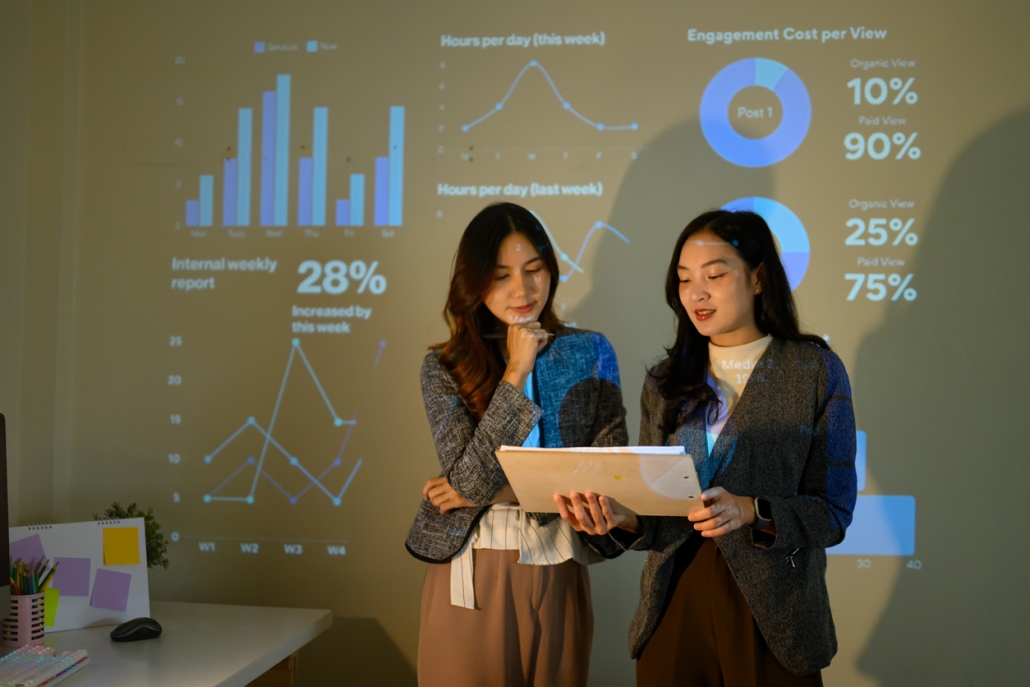
The Intelligence Asset report that comes out of every activation includes thematic analysis of all responses, voice sentiment patterns, engagement duration, participation rates by question, recommended strategies, and full attendee contact data captured at the moment of highest engagement. That is a post-event deliverable that answers the question every CMO is actually asking: what did we learn about the people who showed up?
92% of trade show attendees go specifically to see new products. The activation that makes them stop, participate, and leave with something personal is the one that earns the traffic. The data report is what earns the renewal.
VoxMerch deploys as a strategic capability you can bring to any client, at any event, at any scale. The technology, the print production, and the post-event reporting are all handled. Your job is to design the experience around it.
How It Works:
From Setup to Data Deliverable
The question design comes first. VoxMerch works with the brand, through the agency, to define the question prompts. These are not generic prompts. They are mapped to specific business objectives, just as Optum mapped each of its questions to a core initiative. Up to six questions can be set at a time.
Setup on the show floor is turnkey. The VoxMerch client portal is a turnkey setup that takes minutes to set up. The agency’s team manages equipment and print production on-site. There is no IT integration, and no logistical burden on the exhibitor’s team.
The 40-second window is by design. After an attendee submits their voice input, the AI takes approximately 40 seconds to generate the artwork. That window is not dead time. It is the designed conversation moment, the point at which booth staff can engage the attendee in a real dialogue while they are already interested and waiting.
The data deliverable closes the loop. Every activation produces a full report: responses organized by theme, sentiment patterns, participation rates, and the attendee contact list with each person’s own words attached to their record. The follow-up is not a cold sequence. It is a warm conversation that starts from what each person already told the brand they care about.
The easiest way to understand what AI event activation produces is to see a real one.
The Optum case study from SCOPE 2026 walks through the question design, the on-floor experience, the data output, and the results in full detail.
Bring this to your next client Pitch
Price an activation in the configurator first. When you are ready to walk a client through it, book a demo with us.
Frequently asked questions
What is AI event activation?
AI event activation is a live, on-site brand experience where attendees interact with an AI-powered platform in real time, typically by answering a brand-defined question via voice. The platform converts that input into a personalized output such as custom artwork, which is then printed on branded merchandise the attendee takes with them. The activation also captures first-party engagement data including what each attendee said, which themes appeared most often, and the attendee’s contact information, given voluntarily during the experience.
How is AI event activation different from a standard trade show giveaway?
A standard giveaway is one item, the same for everyone who passes the booth. An AI event activation produces a unique, personalized item for each attendee based on their own words, and captures structured data in the process. The attendee participates rather than receives, which changes both the quality of the engagement and the value of the data that comes out of it. Research documents that leads from interactive activations convert at two to three times the rate of those from passive badge scans.
What kind of data does an AI event activation produce?
VoxMerch activations produce a post-event Data Insights report that includes full text transcription of all voice responses, thematic analysis showing which topics dominated, engagement duration by question, participation rates, voice sentiment patterns, and the full attendee contact list with each person’s voluntary submission attached. At SCOPE 2026, 198 responses were captured and analyzed, with nearly 78% concentrating around three themes directly aligned to the client’s core business initiatives.
Who sells VoxMerch? Can a brand buy it directly?
VoxMerch sells exclusively through event activation and experiential marketing agencies, as well as event planners. Brands cannot purchase direct. This model ensures that the agencies that carry VoxMerch can white-label the platform under their client’s brand and own the client relationship.
Can VoxMerch be white-labeled for an agency’s client?
Yes. The platform can run entirely under the client’s brand on the activation floor. Question prompts, visual identity, and branding are all configured to the client’s specifications before the event. With the White Label add-on, nothing identifies VoxMerch to attendees. The data deliverable is also branded to the client, making VoxMerch a deployable capability the agency owns within its offering rather than a vendor the client can see or contact directly.
Ready to walk a client through it?
Book a demoLast updated October 2026.