
AI Photo Booth for Events or Voice-to-Art: Which Fits?
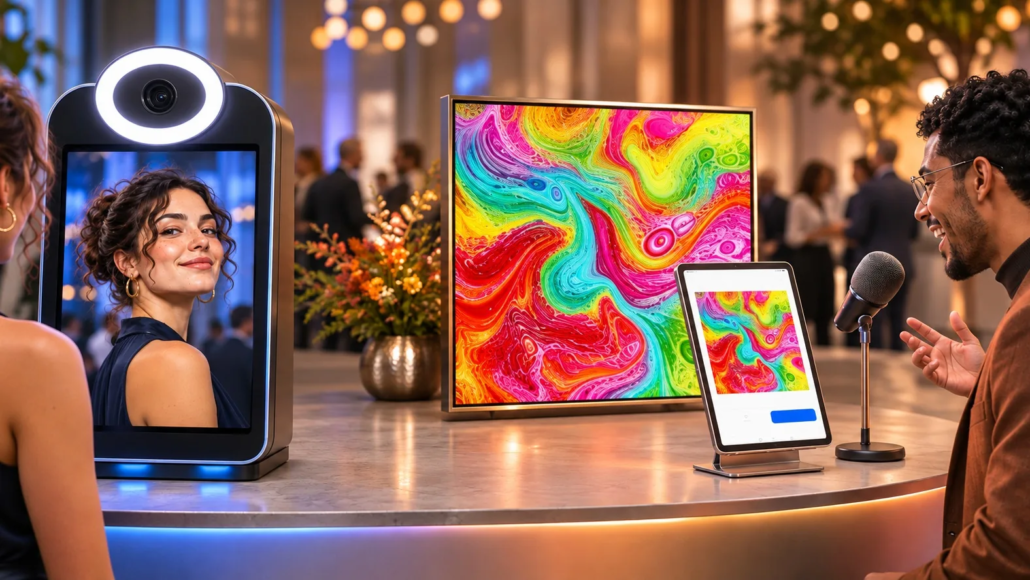
What each format leaves your client after the show, and when to run both.
An AI photo booth for events turns a guest’s photo into styled artwork they can share, which makes it strong for reach, content, and contact capture. A voice-to-art activation turns an attendee’s spoken answer to a brand-defined question into artwork, which gives the client a read on what that audience believes. Many events can run both.
- An AI photo booth turns a guest’s photo into a styled image made for sharing, which makes it strong for reach and content.
- A voice-to-art activation turns an attendee’s spoken answer to a brand-defined question into one-of-a-kind artwork on branded merchandise.
- The choice comes down to what the client needs to report after the show: reach and content, or a read on what the audience believes.
- At a clinical conference for a Fortune 500 healthcare company, 78% of the voice responses converged on a single strategic theme.
A client brief lands in November for a spring conference. It asks for something with AI in it, something people will line up for, and something the CMO can point to at the budget review.
An AI photo booth covers the first two, and plenty of agencies have run one well. The third line is where the format choice matters, because each one leaves the client holding something different when the show is over.
That third line carries weight. In a June 2026 Cvent survey of 901 event and marketing professionals across 12 countries, nine out of 10 said their event programs face high scrutiny over ROI.
What does an AI photo booth do at an event?
An AI photo booth takes a guest’s photo and returns a styled image: a portrait in the event’s theme, a professional headshot, or a scene that puts the guest somewhere new. Guests usually receive it by email or text within minutes, ready to share.
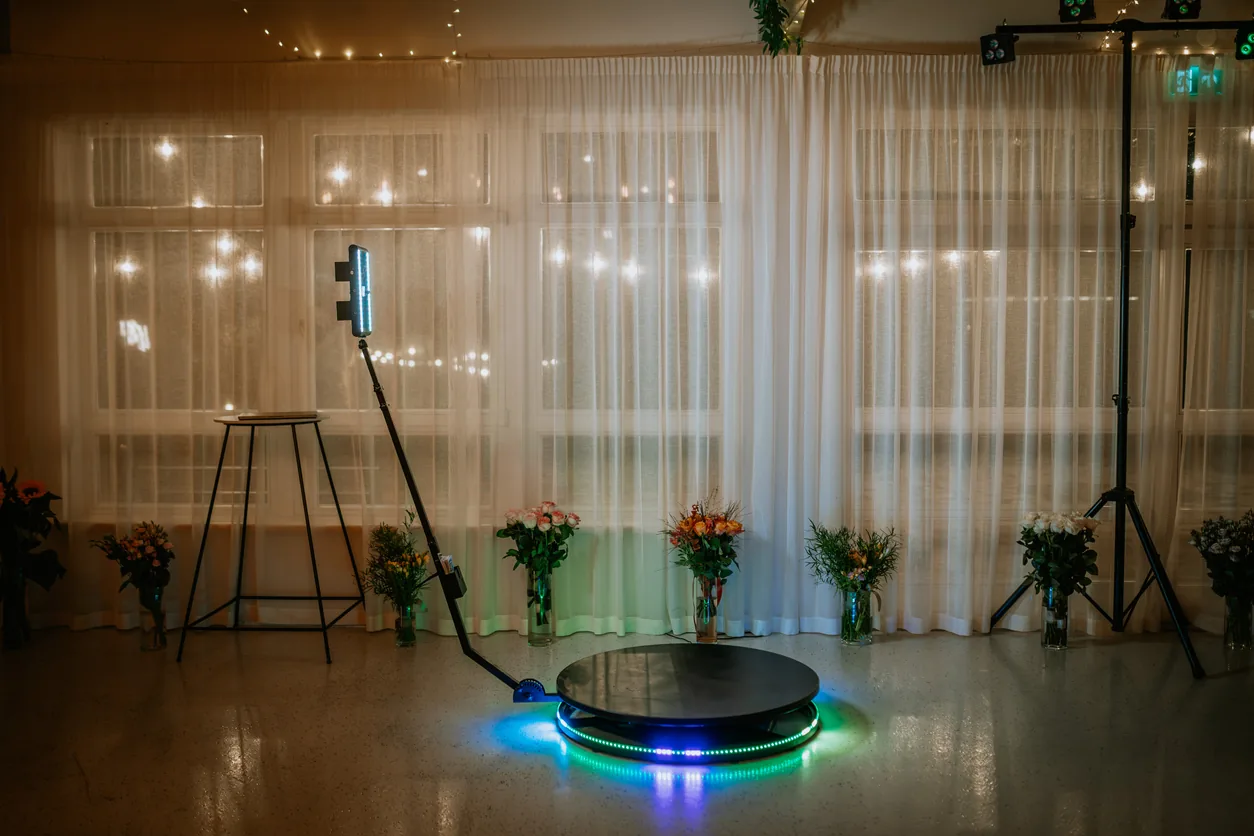
Most setups run at a kiosk or on the guest’s own phone through a QR code. Many put lead fields inside the flow and send the data straight to a CRM, and the analytics show how many guests took part, how much content they created, and how far it traveled.
What an AI photo booth does well:
- Volume. A self-serve or phone-based flow keeps a line moving at a busy event.
- Shareable content. The output is made for social, so reach extends past the room.
- Familiarity. Guests know what to do without instructions, and clients know what they are buying.
What does a voice-to-art activation do?
A voice-to-art activation starts with a microphone instead of a camera. An attendee steps up to a microphone and chooses to answer a brand-defined question. The characteristics of their voice become one-of-a-kind artwork, texted, printed on-site, or shipped on branded merchandise after the event.
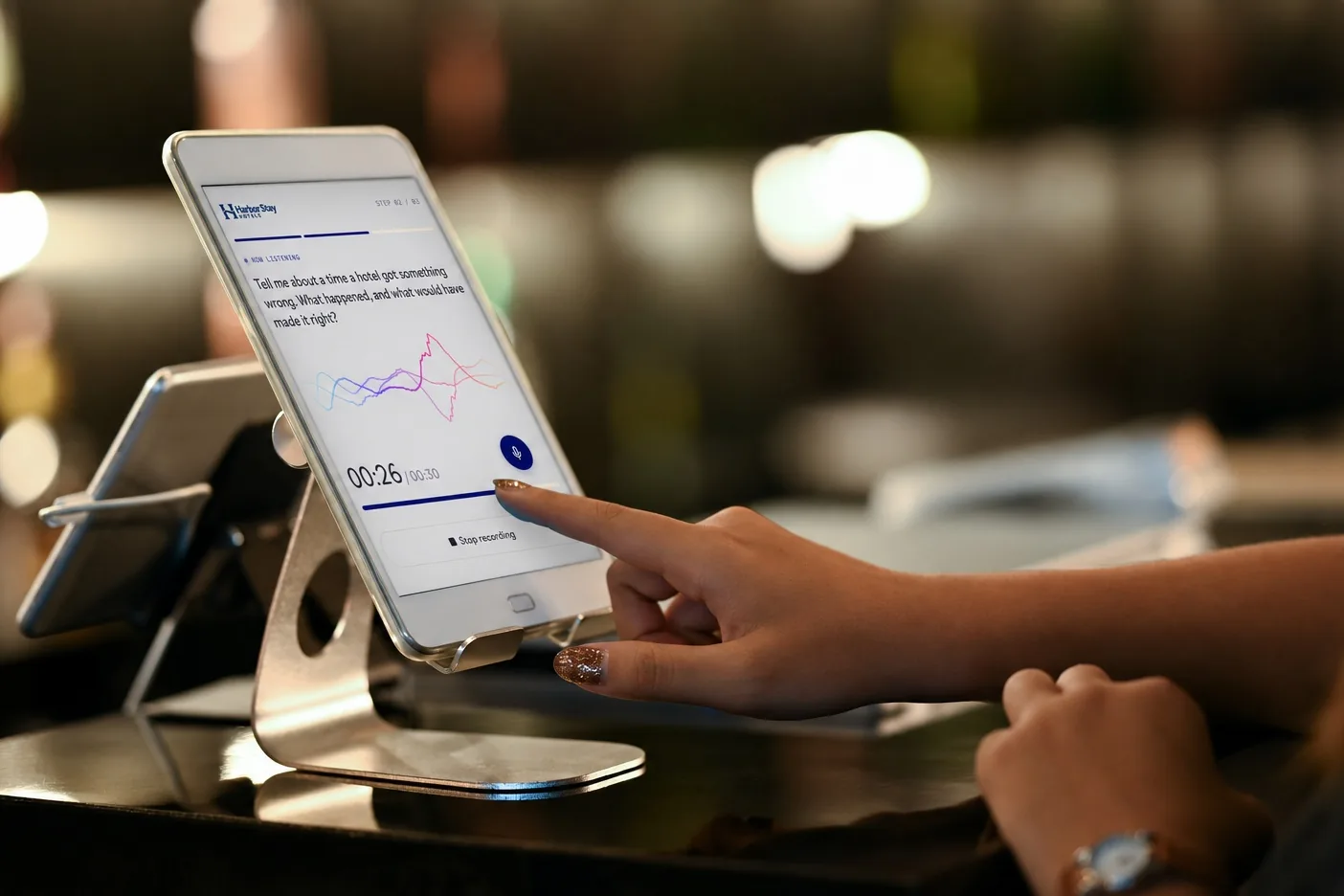
They do this without hesitation because they want to see what their voice looks like in art. A Stanford study found speech input about three times faster than typing on a phone, so an attendee says more at a microphone than they would type into a form in the same moment.
At VoxMerch activations, the forty-second window between the mic and the reveal does a second job. It is when a booth staffer opens a real conversation with someone who has just said what they think and is about to hold something personal.
The questions are where the strategy lives. The brand and its agency write them together, and they point at the problem the brand exists to solve. At a recent insurance activation, the prompts drew on team superpowers, what energizes people at work, and company culture.
VoxMerch runs through experiential agencies in three service models: technology licensing, on-site print and pickup, and drop-ship to attendees.
The format decides what your client is holding the Monday after the show.
An attendee steps up to a microphone and chooses to answer a brand-defined question. Three ways to run it for your client:
Technology licensing
Your team runs the VoxMerch platform inside your own activation design.
Scope licensingOn-site print and pickup
Attendees watch their voice become artwork and pick up their art before they leave.
Scope on-site printDrop-ship to attendees
The artwork ships on branded merchandise to each attendee after the event, so nothing slows the floor.
Scope drop-shipWhat does your client receive after the event?
An AI photo booth leaves a content library, share and view counts, participation numbers, and the contact details guests entered. A voice-to-art activation leaves the answers. Every answer becomes an intelligence asset for your client, a real read on what that crowd believes about them.
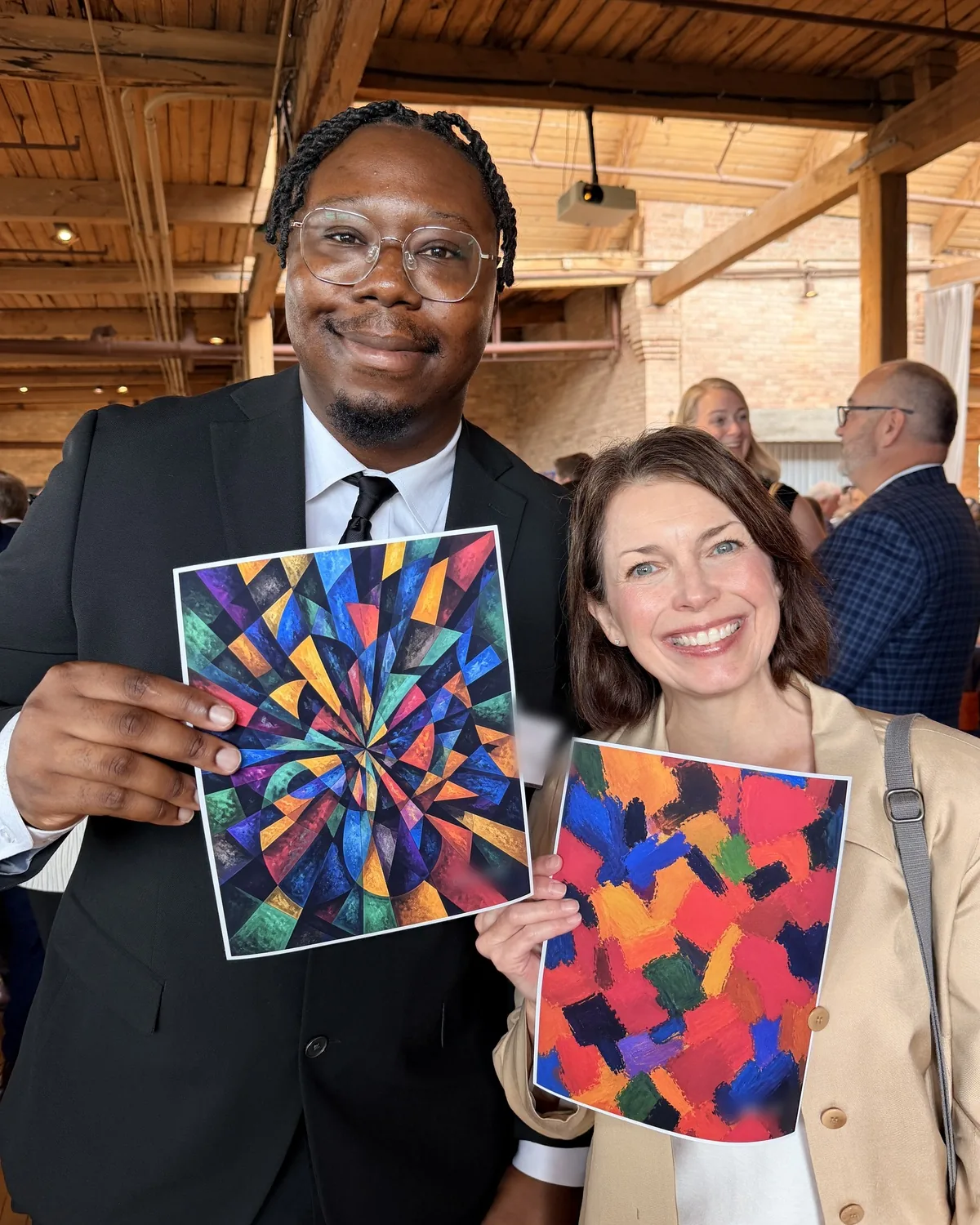
For a reach objective, the photo booth’s numbers are the right ones. Depending on the package, the VoxMerch report includes full transcripts, the themes that run across the audience, benchmark comparisons, response rates, and strategic recommendations. Attendees choose whether to share their name, company, and email.
Attendees there opted in voluntarily, with no incentives or follow-up requests. A brand team can take that 78% into a planning meeting: most of a room, in their own words, pointing at the same problem.
EventTrack 2026, the annual study from Sparks and Event Marketer, found that 61% of consumers are more inclined to purchase after attending a live event. A voice activation adds a record of what those people were thinking while they were in the room.
How do an AI photo booth and voice-to-art compare?
The two formats do different jobs. An AI photo booth is built for volume, reach, and content. A voice-to-art activation is built for a read on what the audience believes and for the conversation at the booth. Both can carry the client’s brand, and both send the attendee home with something they keep.
| Criterion | AI photo booth | Voice-to-art activation |
|---|---|---|
| What the attendee does | Takes a photo, often on their own phone | Steps up to a microphone and chooses to answer a brand-defined question |
| What they take home | Styled portraits or scenes, shared digitally, with prints at some setups | One-of-a-kind artwork made from their voice, printed on branded merchandise |
| Where it shines | High volume, social reach, content | A read on what the audience believes, and booth conversations |
| What the client receives | Content, shares, participation counts, contact details | Transcripts, themes, response rates, recommendations, opted-in contacts |
| Role of the booth staff | Light, since self-serve flows run with little help | A conversation in the forty-second window between the mic and the reveal |
| Delivery | Email or text link, with optional on-site printing | Texted, printed on site for pickup, or drop-shipped after the event |
| Best-fit events | Galas, festivals, consumer launches, headshot lounges | Conferences, product launches, sales kickoffs, internal culture events |
The table describes typical setups, and vendors on both sides keep adding features. Read it as which job each format is built for, not as a ranking.
What should you ask the client before choosing?
Start with what the client will be measured on. Attendees and planners often read the same event differently: in Freeman research reported by MPI, 40% of attendees said they had a memorable or peak moment at an event, while organizers expected 80% to say so.
- What will you report after the show? Reach, impressions, and shared content point one way. A finding about the audience points the other.
- Who is in the room? A crowd of consumers at a festival and a room of buyers at a conference want different things in the same few minutes.
- What happens to the data next? If the client’s team will use the answers for messaging, product, or sales follow-up, plan for answers. If the goal is a content library, plan for images.
When does each format fit?
Choose an AI photo booth when reach and content are the goal. Choose a voice-to-art activation when the client needs to know what an audience believes. Run both when the footprint has room, and the client has a reach goal and an insight goal at the same event.
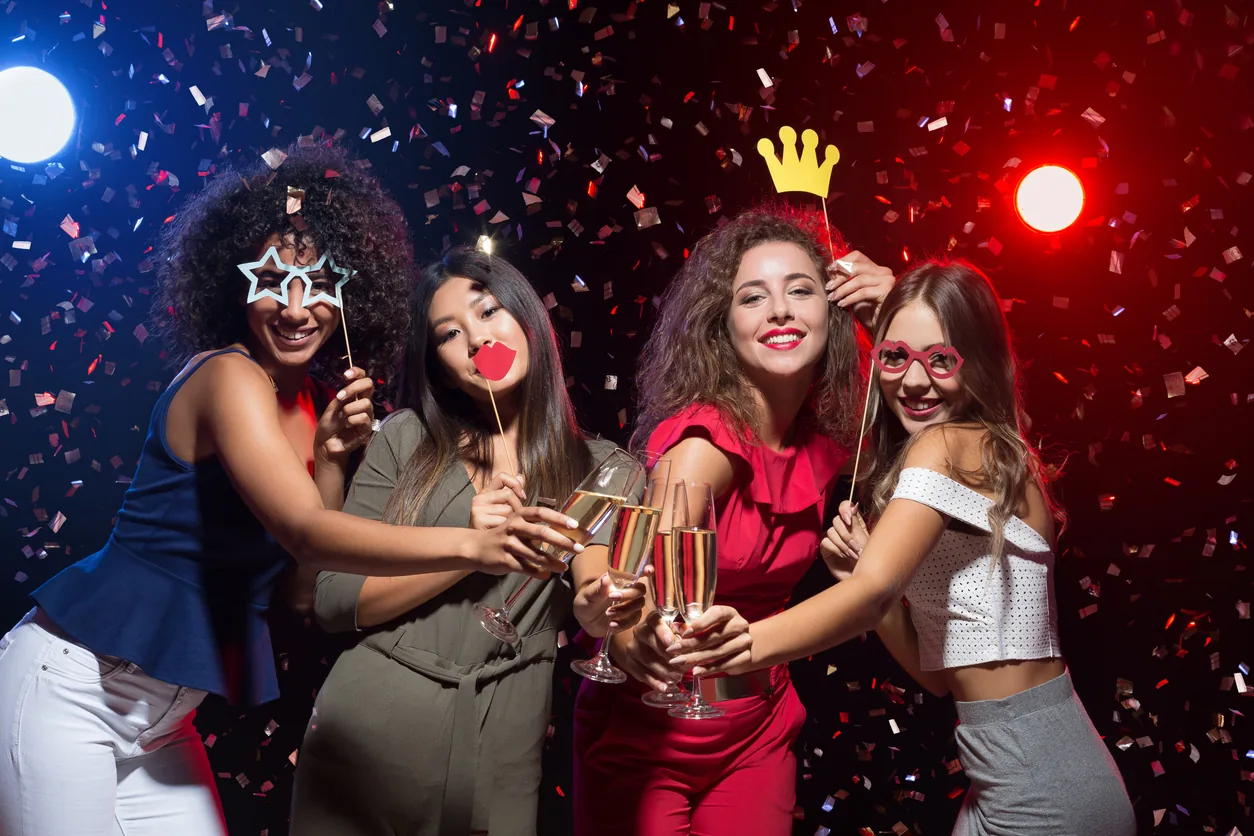
Choose an AI photo booth when:
- The objective is reach, and the client wants content attendees will post.
- Traffic will be heavy, and the flow needs to run with little staffing.
- The event is social at heart, such as a gala, a festival, or a holiday party.
A headshot lounge at a professional conference is a good example. Attendees leave with a picture they will use on their profiles, and the client gets a steady line.
Choose a voice-to-art activation when:
- The client needs to know what an audience believes ahead of a launch, a campaign, or a planning cycle.
- The booth team needs a reason to start a real conversation.
- The client wants a physical take-home that carries the brand.
It works at internal events too. At a recent insurance activation, 173 attendees completed a voice activation and left 4,691 words of input in a single day. Team and teammates came up 69 times, and excitement and energy 67 times, which told the client what its people value, in their words. The proof that the experience worked showed up in behavior: the queue, attendees coming back with colleagues, and departments asking to run it.
Run both when:
- The footprint has room for two experiences.
- The client has a reach goal and an insight goal at the same event.
- The agency wants a photo moment near the entrance and a deeper conversation inside the booth.
VoxMerch is built to sit alongside the activations partners already run. A photo booth can bring people in, and a microphone can capture what they think once they are there.
How do you add a voice activation to a client event?
The plan comes down to four decisions: the question, the service model, the staff brief, and the report. Each is made with the client before the event, so the activation answers something the brand needs to know, and the booth team knows what to do in the forty-second window.
- Write the questions with the clientStart from the problem the brand exists to solve and write one question an attendee would want to answer out loud. The question decides what the report can tell the client.
- Pick the service modelTechnology licensing suits an agency with its own print operation or only needs texting. On-site print and pickup suits a client who wants the whole station handled. Drop-ship suits a floor where people would rather not carry anything home.
- Brief the booth staff on the forty-second windowGive the team one follow-up question to use while the artwork renders, tied to what the attendee just said.
- Decide what the report needs to answerAgree with the client on the decision the data will inform.
Bring this to your next client Pitch
Price an activation in the configurator first. When you are ready to walk a client through it, book a demo with us.
Frequently asked questions
What is an AI photo booth for events?
An AI photo booth is an event activation that turns a guest’s photo into a styled image, such as a themed portrait, a headshot, or a scene. Guests usually receive the image by email or text to share, and many setups capture contact details in the same flow.
What is a voice-to-art activation?
A voice-to-art activation turns an attendee’s spoken answer into artwork. An attendee steps up to a microphone and chooses to answer a brand-defined question, and the characteristics of their voice become one-of-a-kind artwork, texted, printed on-site, or shipped on branded merchandise after the event. The brand receives the answers as well as the moment.
Can an event run an AI photo booth and a voice activation together?
Yes, because the two formats do different jobs. A photo booth can carry volume and social reach, while a voice activation captures what attendees believe about the problem the brand solves.
What does the client receive after a voice-to-art activation?
Depending on the package, the client receives full transcripts, the themes that run across the audience, benchmark comparisons, response rates, and strategic recommendations. Attendees choose whether to share their name, company, and email.
What does an event need to run a voice-to-art activation?
A spot on the floor for the station, a brand-defined question agreed with the client in advance, and a service model: technology licensing, on-site print and pickup, or drop-ship to attendees. VoxMerch configures the rest around the event and its expected traffic.
How much does an AI event activation cost?
Cost is configured per event and depends on the format, the number of activations, and the service model. Brands work with VoxMerch through their experiential agency, and agencies can price a scenario in the activation configurator.
Ready to walk a client through it?
Book a demo- Event marketers are confident they’re building audience trust, yet less than one third are actively measuring it, Cvent, June 2026
- Smartphone speech recognition can write text messages three times faster than human typing, Stanford News, August 2016
- EventTrack 2026, Sparks and Event Marketer
- Core objectives vs. wow factor: understanding the attendee-planner disconnect, MPI, reporting Freeman research, October 2025
Last updated November 2026.